Showing posts with label audio engineering. Show all posts

Friday, 17 December 2021

On location sound recording / Sync Sound training in progress

       Sound in film and television is a critical part of the storytelling process. Whether it’s voices, music or sound effects the audio helps add layers to a production that contribute to the emotion, drama or story.

      One of the vital roles on a film or television set is the Location Sound Recordist (also known as a Production Sound Mixer, Location Sound Engineer or Sound Mixer). This person is responsible for recording all sound on set during the production.


Wednesday, 11 January 2012

Project On "Audio For Film" by Sound Engineering Academy Students

SEA's February 2011 batch students start the production of  Project On "Audio For Film". The Short Film named "Broken strings" is a campus based subject. The Entire production & post-production will be handled by the students with SEA's funding. Its will be an one month project and the production is to be completed by 5 days. Audio post for film is their subject related area and the project assessment will be based on Dubbing, Sound Effects, Re-recording & Final Mixing.

We wish you all the very best for its successful completion.


Monday, 12 December 2011

An Audio Timeline

Every wondered about the history of sound / audio engineering and recording. In todays post we  care going to showcase some of the significant events, inventions, products and their purveyors,from phonograph cylinder to the latest invention like Blu-Ray Disk which has changed sound / audio industry. 


Year Physical format Content format
1870s Phonograph cylinder Analog; "hill-and-dale" grooves, vertical stylus
1895 Gramophone record Analog; lateral grooves, horizontal stylus

1898

78rpm or 78s
disc first produced around 1898; popular from 1910-1950s; by 1910 actual speed ranged from about 78 to 80 rpm; size was 10 or 12 inches
1930s Wire recording Analog
1940s Reel-to-reel tape
Magnetic tape
Analog
1948 Vinyl record Analog; lateral grooves, horizontal stylus
also known as LP or long-playing records
1957 Stereophonic vinyl record Analog; lateral/vertical stylus (each channel encoded 45 degrees to vertical)
1963 Audio cassette Analog; 1/8 in. tape width; 1 7/8 ips
popular in the US through the 1990s
1964 8-track tape Analog; 1/4 in. tape width; 3 3/4 ips in an endless loop cartridge
1969 Microcassette Analog
1970
Dolby noise reduction introduced (cassettes)
1975 Betamax digital audio "Dolby Stereo" cinema surround sound
1982 Compact disc Digital; usually 4 3/4 in. diameter
first available in Japan in October 1982, in Europe in February 1983, and in the US in March 1983
1985 CD-ROM
1987 Digital audio tape (DAT) cassette version of the CD; used in the recording industry until 2000; DAT players ceased production in 2005
1990s Digital compact cassette
1991 MiniDisc
1992
WAVEform (WAV)
Dolby digital surround cinema sound
1993
Dolby theatre system (DTS)
Sony dynamic digital sound (SDDS)
1995
MP3
1996 DVD
1999 Streaming audio

1999 Super audio CD (SACD) Windows media audio (WMA) (higher sampling rate, spatial sound capability)
2000 DVD-Audio
2004 DualDisc CD on one side, DVD on the other
2006 Blu-ray Disc  Dolby TrueHDDTS-HD Master Audio


Related Images with regard to the history of Sound / Audio Engineering.


Friday, 2 December 2011

A session on theatre art for Students in Sound Engineering Academy


SEA August 2011 Batch Students had a Session On  “ THEATRE ART By   RAJESH CHANDRAN. T.T

*Former Director – Children’s Theatre
 Abinaya Theatre Research Centre & International theatre group
*Former Head of  Theatre Art 
 TVS Academy, Bangaloor
*Presently Working As programme in charge of IGNOU Theater Art Department at  Abhinaya

He is a 1st rank holder in his Masters in Theater Art.
>Acted about 70 major productions, and directed 34 plays
>Written 15 children’s plays.
>Participated and organized many theatre workshops all over India
>Undergone training programs from many eminent Theatre Directors in and abroad.
>Represented Kerala in the Natya Samarch held at “Kozhikode”  and Rengayana,
  Mysore, Young Directors Scheme, organized by cultural ministry, Govt. of India

Session on Theatre Art in Sound Engineering Academy

Session on Theatre Art in Sound Engineering Academy

Session on Theatre Art in Sound Engineering Academy

Wednesday, 6 April 2011

About Audio Engineering

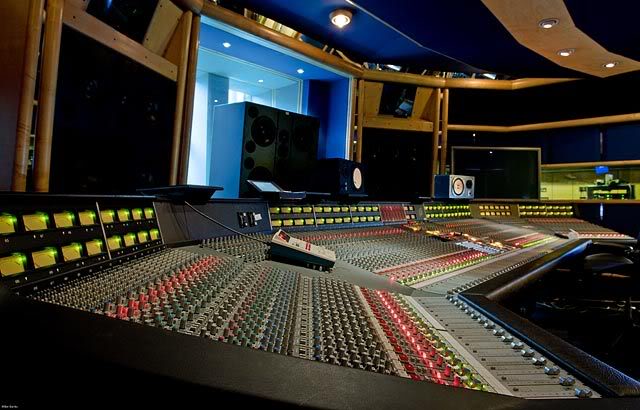
Audio engineering is a skilled trade that deals with the use of machinery and equipment for the recording, mixing and reproduction of sounds. The field draws on many artistic and vocational areas, including electronics, acoustics, psychoacoustics, and music. An audio engineer is proficient with different types of recording media, such as analog tape, digital multitrack recorders and workstations, and computer knowledge. With the advent of the digital age, it is becoming more and more important for the audio engineer to be versed in the understanding of software and hardware integration from synchronization to analog to digital transfers.

Audio engineering concerns the creative and practical aspects of sounds and music, in contrast with the formal engineering discipline known as acoustical engineering. Producer, engineer, mixer Phil Ek has described audio engineering as the "technical aspect of recording—the placing of microphones, the turning of pre-amp knobs, the setting of levels. The physical recording of any project is done by an engineer... the nuts and bolts. Many recording engineers also invented new technology, equipment and techniques, to enhance the process and art.

Find more details about audio engineering at http://en.wikipedia.org/wiki/Audio_engineering